1.1 Statics Overview
Mechanics is a branch of physical science that describes and predicts conditions of rest or motion of bodies under the action of forces.
In statics, we focus on bodies that are at rest (or in equilibrium) and the forces acting on them.

1.1.1 What Is Mechanics?
Mechanics describes and predicts conditions of rest or motion of bodies under the action of forces.
While we are studying statics, we focus on bodies at rest and the forces acting on them.
More generally, mechanics can be broken into:
Rigid Bodies
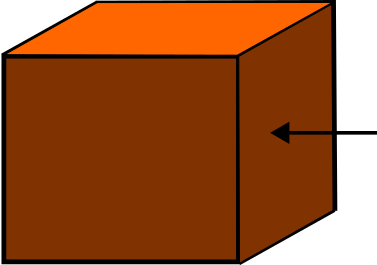
Bodies that do not deform.
Statics – Objects at rest.
Dynamics – Objects in motion.
Deformable Bodies
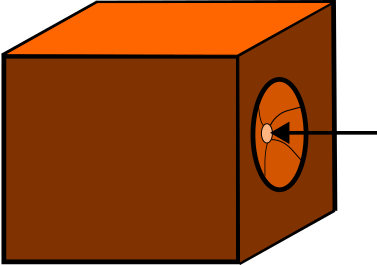
Bodies that are allowed to deform.
Fluid Mechanics
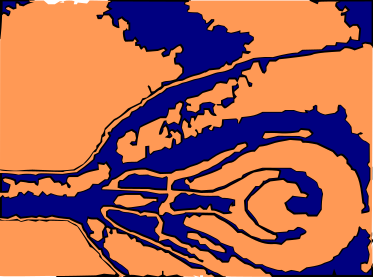
Fluid Statics – Fluids at rest.
Fluid Dynamics – Fluids in motion.
1.1.2 Idealizations
In statics, we often model objects as particles or rigid bodies.
Particles
Have mass, can have forces applied, but have no dimensions.

Rigid Bodies
Have mass, forces, and dimensions.

1.1.3 Newton's Laws of Motion
Newton’s laws form the basis of engineering mechanics.
1st Law
An object remains at rest or in motion unless acted on by a net external force.
2nd Law
Force equals mass times acceleration.
\( \mathbf{F} = m\mathbf{a} \)
3rd Law
Every action has an equal and opposite reaction.