1.3 Unit Conversions
Statics problems frequently involve switching between different unit systems, prefixes, and scales. A clear understanding of unit prefixes and common conversion factors is essential to avoid numerical mistakes and inconsistent equations.
This section reviews SI prefixes, a concise conversion table for quantities commonly used in statics, and several worked conversion examples.
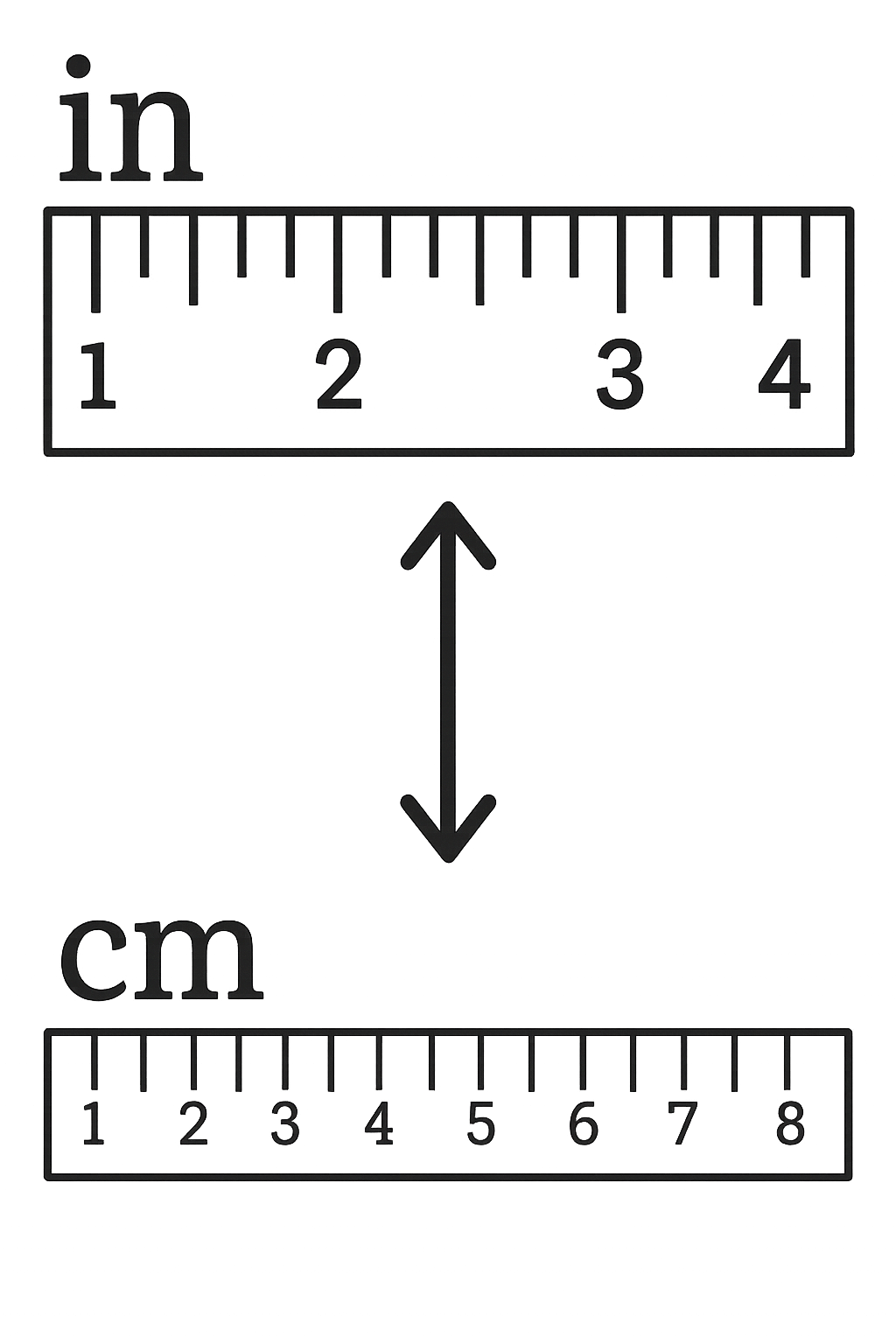
1.3.1 Unit Prefixes
Engineering problems span a wide range of magnitudes, so prefixes are used to simplify numbers. For example, the weight of a cable may be expressed in kilonewtons (kN), while stress may be expressed in megapascals (MPa).
| Prefix | Symbol | Factor | Scientific notation |
|---|---|---|---|
| kilo | k | 1,000 | 103 |
| mega | M | 1,000,000 | 106 |
| giga | G | 1,000,000,000 | 109 |
| milli | m | 0.001 | 10-3 |
| micro | µ | 0.000001 | 10-6 |
| nano | n | 0.000000001 | 10-9 |
1.3.2 Common Conversion Table
Statics commonly involves forces, moments, lengths, and stresses. The table below focuses on conversions you will use frequently in homework and exams.
| Quantity | Conversion |
|---|---|
| Time | 1 hr = 60 min |
| Time | 1 min = 60 s |
| Length | 1 in = 25.4 mm |
| Length | 1 ft = 12 in |
| Length | 1 m = 1.09361 yd |
| Mass | 1 slug = 14.5939 kg |
| Force | 1 lb = 4.4482 N |
1.3.3 Unit Conversion Examples
Worked conversion examples
These examples illustrate how to apply conversion factors systematically so that units cancel cleanly and the final answer matches the desired units.
Convert 60 mph to km/s (use 1 mile = 1.60934 km).
Convert 2 m\(^3\) to yd\(^3\) (use \( 1~m = 1.09361~\text{yd} \)).
Convert a beam force of 2.5 kN into lbf.
Find the pressure in psi for a stress of 500 MPa.
Determine the moment in lb·ft for a torque of 100 N·m.